● INDIA STRATEGY & POLICY
Turning India's Largest Industrial Liability into a Strategic Mineral Advantage
INDIA'S RARE EARTH REALITY
Scale, Concentration, and Risk
India’s rare-earth challenge is not future-tense. It is already accumulated, geographically concentrated in states like Odisha, and policy-relevant today.
9M t/year
Annual GenerationIndia's total rare earth production, with an ~8.7M t/year net accumulation into storage ponds.
<3%
Utilization RateFar below the 25% utilization target articulated by national regulators.
STRATEGIC MINERAL POTENTIAL
Hiding in Plain Sight
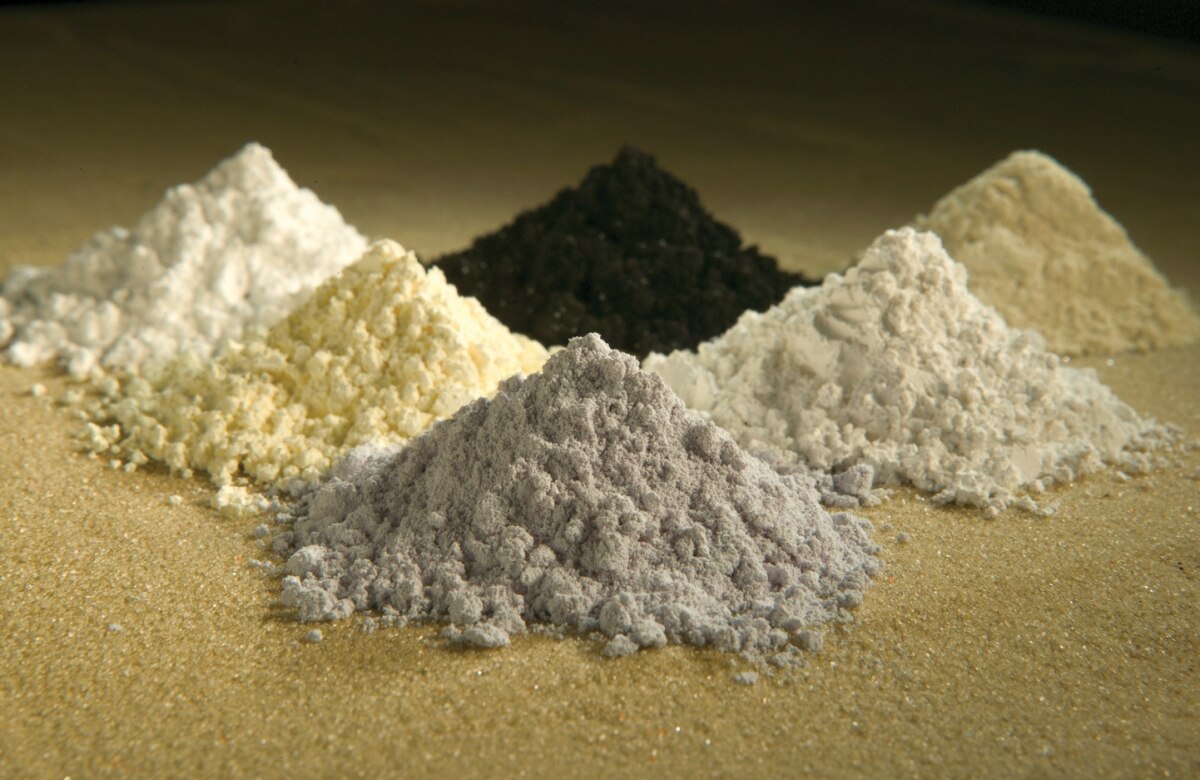
At national throughput levels, India's stockpiles translate into a strategic materials opportunity for critical security — entirely without new mining.
Recoverable Concentrations
Iron oxides (~35–45%), Alumina (~15–20%), and Titanium dioxide (~10–15%).
High-Value Trace Metals
Economically significant streams of Scandium and Rare Earth Elements.
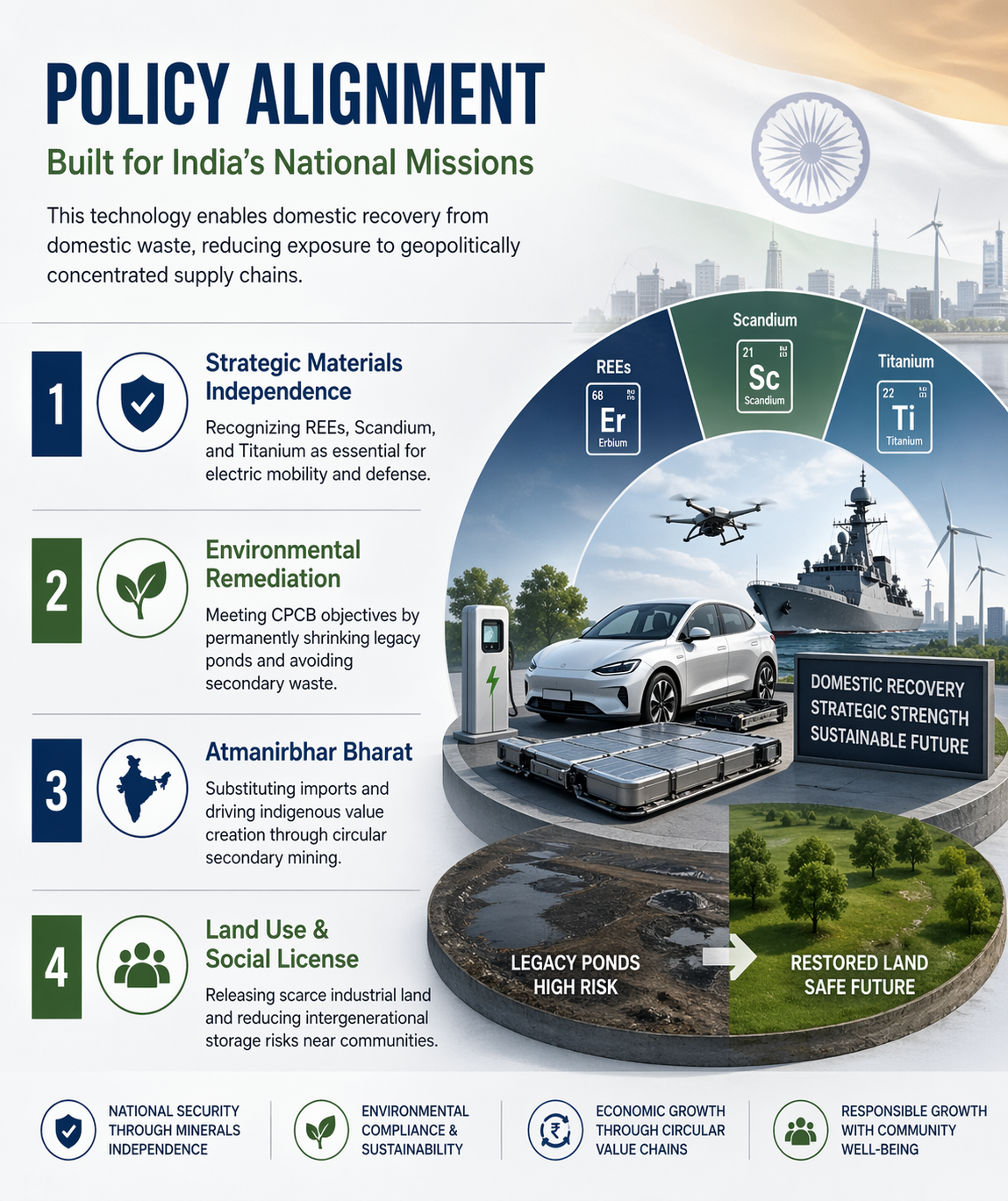
POLICY ALIGNMENT
Built for India's National Missions
This technology enables domestic recovery from domestic waste, reducing exposure to geopolitically concentrated supply chains.
1. Strategic Materials Independence
Recognizing REEs, Scandium, and Titanium as essential for electric mobility and defense.
2. Environmental Remediation
Meeting CPCB objectives by permanently shrinking legacy ponds and avoiding secondary waste.
3. Atmanirbhar Bharat
Substituting imports and driving indigenous value creation through circular secondary mining.
4. Land Use & Social License
Releasing scarce industrial land and reducing intergenerational storage risks near communities.
DEPLOYMENT STRATEGY FOR INDIA
Target Integration Model
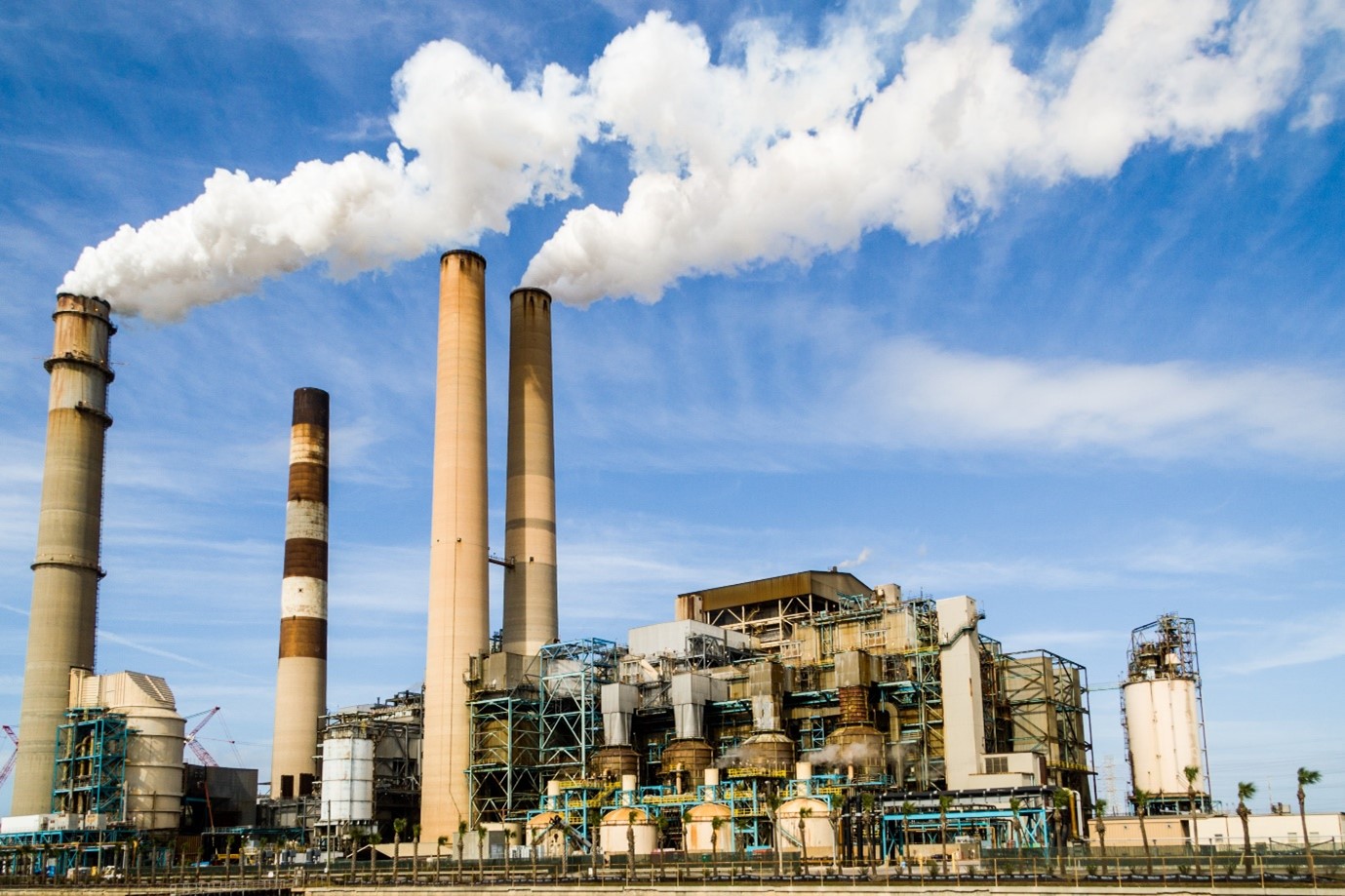
Designed to deploy on-site or adjacent to existing alumina refineries, accepting live residue streams, dewatered rare earth, or legacy pond materials without disrupting core operations.
Modular Scale-Up
Initial modules aligned to 350,000 t/year processing blocks, expanding to 1M+ t/year.
Priority Geographies
Focused targeted expansion starting in Odisha, Jharkhand, and Uttar Pradesh.
India already owns one of the world's largest critical-minerals resources.
It is stored as rare earth. The question is no longer whether to remediate it—but whether to do so in a way that strengthens national capability.